Harold Calloway · from Harold's Forgotten Tradep. 1

You know the drawer that sticks is a small job. This book shows you what the small job is.

Your father would have had it right in ten minutes with a plane and a candle stub, and nobody ever showed you what those ten minutes consisted of. That is not a failing in you. This book is 348 pages of what he knew, one thing to a page: the bench, the edge, wood, the house, leather and cloth, and the engine.

Book $9.99 · 30-day money-back guarantee

MONEY-BACK GUARANTEE · 30 DAYS ·30DAY

Get the free 30-Day Forgotten Skills Challenge and chapter one

Put your email in the box and two things open on the very next page, both free: the whole 30-Day Forgotten Skills Challenge, and Chapter 1, Why This Knowledge Disappeared. Thirty skills working men used to know cold. One a day, with the tools you already have. There is nothing to install and no card to enter.

The opening page of the free chapter, Why This Knowledge Disappeared

We keep your address so Harold can write to you now and then with something worth reading. One click stops it for good. We never sell it and we never pass it on.

What Grandpa Knew, the book
The 30-Day Forgotten Skills Challenge, the workbook
What Grandpa Knew29 chapters · 348 pages of instruction · PDF + EPUB · 30-day money-back guarantee
$9.99

The 30-Day Forgotten Skills Challenge is free.

Where all of this comes fromp. 2

I was not there. I read the men who were.

A man who worked a bench in 1950 would be past ninety now, and I want to be plain about that because a lot of people writing about this period are not. What I do is read: trade manuals, state industrial arts courses of study from the 1930s and 1940s, apprentice handbooks, barbershop guides, maker's catalogues, the patent record back to 1790, and the household books that used to come free with a subscription.

So when this book says a thing, it is because a manual of the period said it, and I have tried to say which one and when. Where the sources disagree, I say that. Where a thing is simply not known, I say that too, which happens more often than you would think.

Not one brand name is recommended anywhere in this book. A make worth having now may be worth nothing by the time you read it, and the tool already in your shed is nearly always the one to learn on.


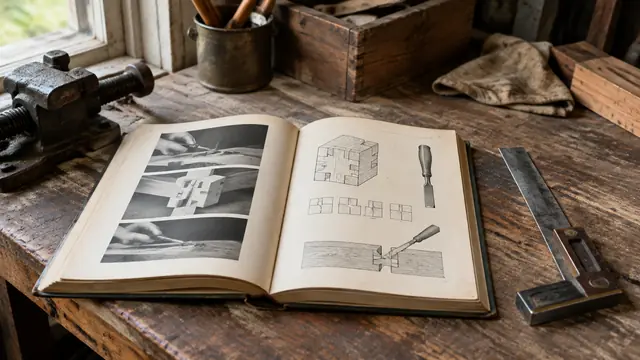
An old trade manual open on a workbench beside a square and a chisel
From the book, Chapter 1: Why This Knowledge Disappeared.

Everybody planes the drawer. The drawer is almost never the problem.

Chapter 11, Truing a Drawer So It Never Sticks Again

The drawer that sticks, done the old wayp. 4

Here are the ten minutes.

1 · Look first

A drawer that sticks in July and runs in January is not worn out. It is doing exactly what wood does. And it is almost never tight everywhere; it is binding at one or two small places.

2 · Chalk the runner

Chalk the runners in the carcase, not the drawer. It is the engineer's method of blueing a bearing, done with a piece of blackboard chalk.

3 · Work it twice

Push it in and out twice. The chalk will be gone where it is tight. Those marks are the whole answer and they take thirty seconds to find.

4 · Plane the runner, not the drawer

Take it off the runner, which is meant to wear. A drawer side is part of a dovetailed box and it cannot be put back. Take off the very least that works.

5 · A candle stub

A candle stub or a dry bar of soap on the runner, rubbed hard, worked in by running the drawer a few times. Both are the old answer and both work.

And it runs.

That is five of the twelve pieces in Chapter 11. The book has twenty-nine chapters built like it, one thing to a page, from the workbench to the barber's chair.

It sticks.

drawer side runner (meant to wear)tight here
Drawn for this page from Chapter 11: a chest seen from the side, its side taken off.

29 chapters. 348 pages. One thing to a page.

Every page is one thing: what it is, how it is done, and what it relies on. There is a picture on every one. Here is the whole book, part by part.

Part A4 chapters

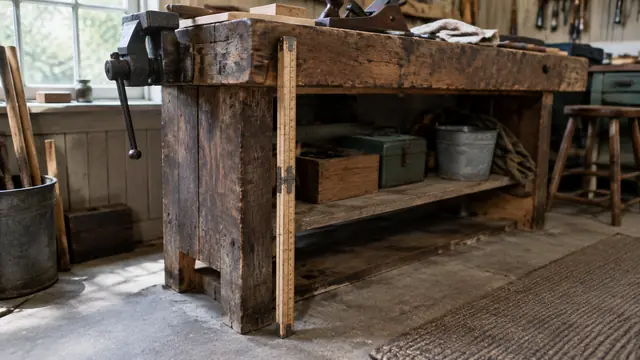
A heavy workbench with a vise in a small shop

AThe bench, and the wall behind it

  1. Why This Knowledge Disappeared
  2. Building a Workbench That Actually Works
  3. The Five Hand Tools Every Man Should Own and Understand
  4. Storing and Maintaining Tools So They Last
A bench is not furniture. It is the third hand, and every operation in this book assumes you have one.

Part B4 chapters

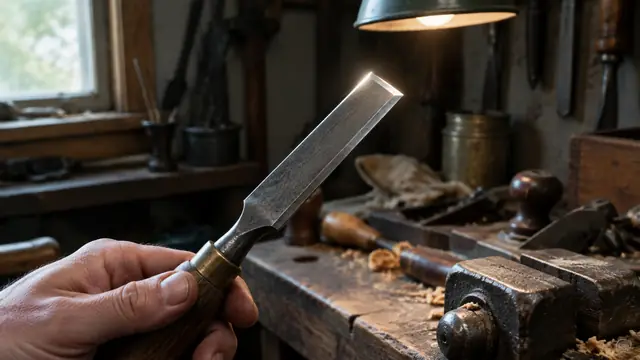
A hand holding a chisel, its edge catching the lamp light

BThe edge

  1. Sharpening: Getting a True Working Edge
  2. Draw Filing, and What It Does That Filing Cannot
  3. Case Hardening in a Home Shop
  4. Swedging and Simple Metal Shaping
An edge is where two flat surfaces meet. If either one is not flat, there is no edge there at all, however long you rub it.

Part C5 chapters

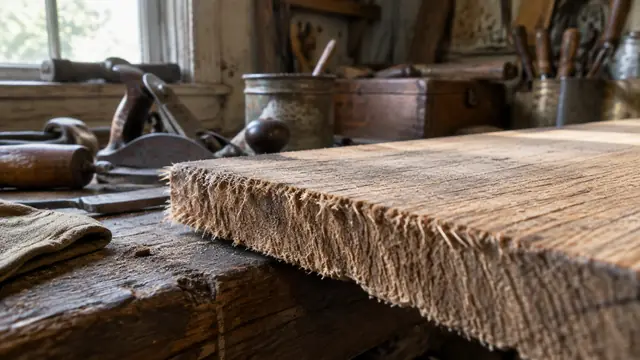
The end of a rough board on a bench, showing its grain

CWood

  1. Reading the Grain Before You Cut
  2. Fasteners and Joints That Hold
  3. Truing a Drawer So It Never Sticks Again
  4. Refinishing Without Erasing the Patina
  5. Reconditioning an Inherited Hand Tool
A board is not a piece of material. It is a bundle of tubes that was once standing up, and it still behaves like one.

Part D4 chapters

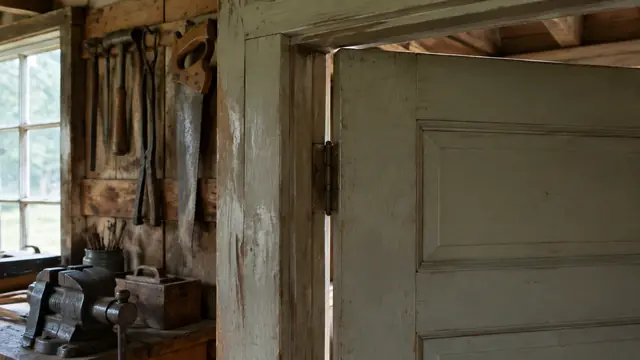
An old panelled door standing open in a workshop

DThe house a man kept up

  1. Fixing a Sticking Window or Door
  2. Small Household Repairs That Save a Service Call
  3. Household Wiring, and Where the Line Is
  4. Ladders, Ropes and Simple Rigging
The old manuals were not casual about this and neither am I. The useful knowledge here is knowing which side of the line a job falls on.

Part E7 chapters

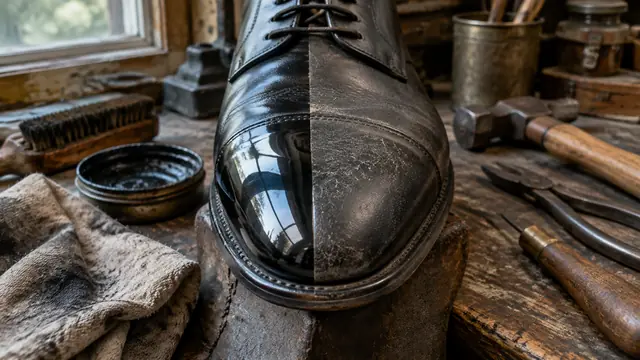
A black leather shoe, half shined, on a bench beside brushes and a tin of polish

ELeather, cloth and the shave

  1. Saddle Soap and Leather Restoration
  2. The Proper Shoe Shine
  3. Repairing a Dropped Stitch Welt on Work Boots
  4. Caring for Denim, Canvas and Wool
  5. Patching and Mending Like a Tailor's Apprentice
  6. The Straight Razor, the Strop and the Blacking
  7. The Shave, and the Finish Cut at Home
You are not polishing the leather. You are building a thin sheet of wax on top of it and then flattening that sheet until it reflects.

Part F5 chapters

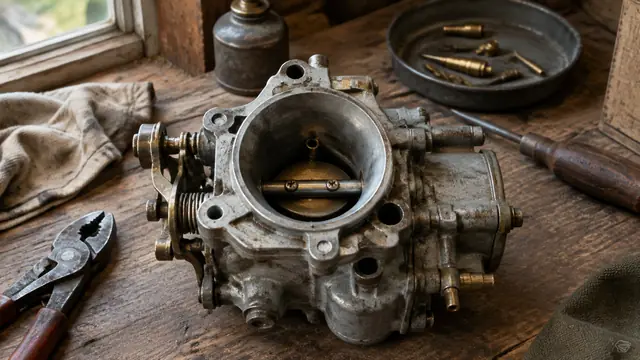
An old carburetor on a bench beside pliers and a screwdriver

FThe engine, and passing it on

  1. Basic Engine Maintenance Every Man Once Knew
  2. Cleaning and Adjusting a Carburetor
  3. Bone Folder Basics and Paper Repair
  4. Mail Order Materials, and Where to Actually Find Them
  5. Building Your Own Trade Manual
None of these checks fixes anything. Every one of them tells you something, and the telling is the whole point.
Get the book · $9.99

Where a price appears at all it is a range from 2026, named as such. Take it as the size of a thing, not the price of it.

Harold Calloway at his workbench, tools on the pegboard behind him
Harold, at the bench

My grandfather knew how to handle nearly all of this.

He did not write any of it down. He did not think it was worth writing down, because in his world everybody knew it. A thing that everybody knows never gets recorded, and then one day not everybody knows it and there is no record.

That is why this had to be reassembled out of other men's manuals, and it is why the last chapter of the book is about a notebook rather than about a tool.

There are three places in here where I stop and tell you to get somebody qualified. Those are not me being careful. They are the three places where the manuals of the period were careful too.

Harold Calloway

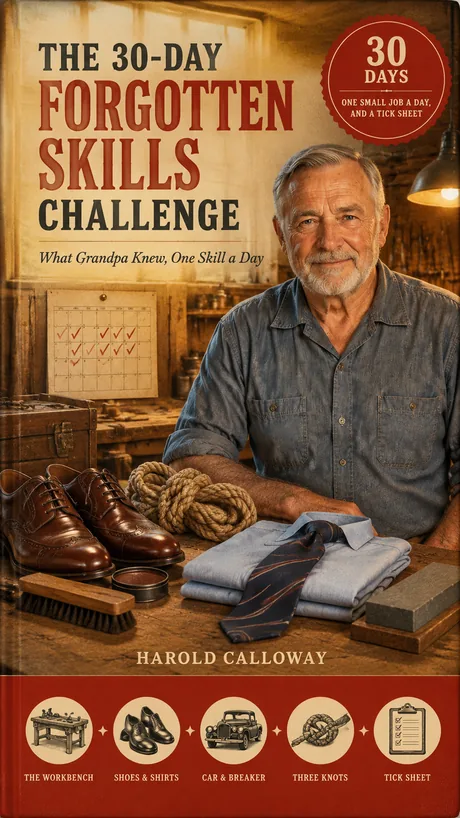
The 30-Day Forgotten Skills Challengep. 7

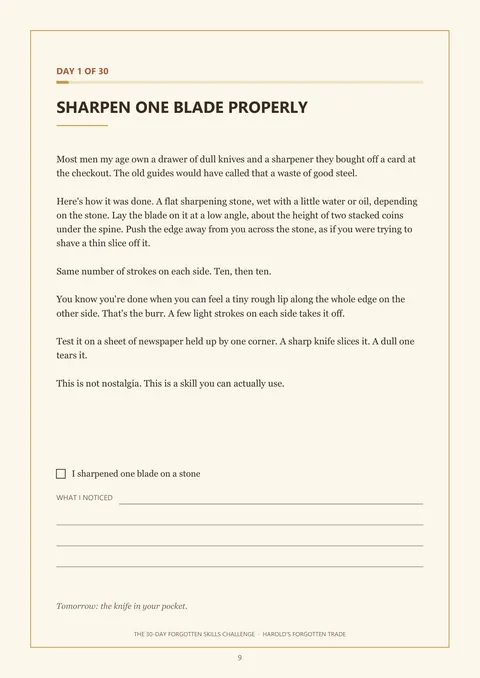
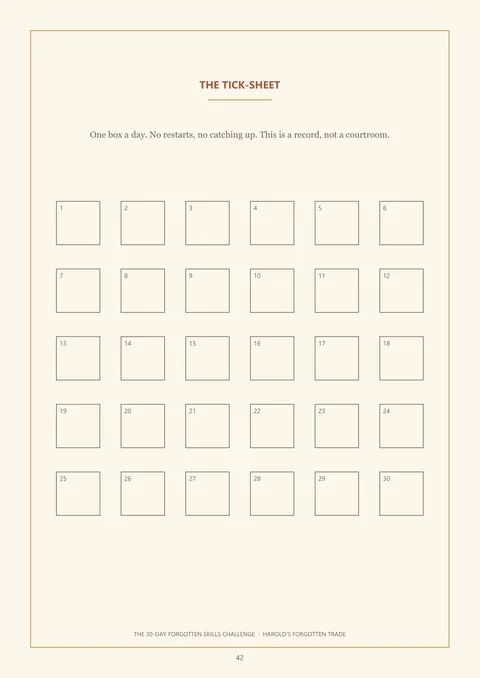
Day 1 of the challenge: sharpen one blade properly The challenge's thirty-box tick sheet

Thirty skills, one a day, with the tools you already have.

Thirty skills working men used to know cold, from the old trade manuals and barbershop guides. Day one is a single blade, sharpened properly.

  1. Week one: the workbench, from a sharp blade to a quiet hinge
  2. Week two: a shoe shine, a four-in-hand, a shirt in eight minutes
  3. Week three: the car, the breaker and the three shutoffs
  4. Week four: three knots, a bench book, and asking somebody older

The challenge is free. What Grandpa Knew is $9.99.

Watch how the challenge works

The orderp. 8

What Grandpa Knew

The Lost Trade Manual for a Man Who Would Rather Do It Himself. One payment, yours forever, with a 30-day money-back guarantee.

What Grandpa Knew

The book

$9.99first edition
  • 348 pages, one thing to a page, with a picture on every one
  • 29 chapters: the bench, the edge, wood, the house, leather and cloth, the engine
  • PDF and EPUB, both included; 386 pages in all
Get the book · $9.99
MONEY-BACK GUARANTEE · 30 DAYS ·30DAYPAY ONCE,YOURSFOREVERFREECHAPTERFIRST
The 30-Day Forgotten Skills Challenge

The 30-Day Challenge

Freesend me the PDF
  • Thirty skills, one a day
  • A box to tick for each
  • The tools you already have

30-day money-back guarantee · PDF and EPUB, delivered by email · card and PayPal, through Gumroad

The last pagep. 9

Chapter 29, Building Your Own Trade Manual

Nobody wrote it down because everybody knew it.

That sentence is the whole reason this book had to exist. It ends with a notebook, and a page like this one, left for what you work out yourself.

Buying it as a gift? It comes by email as a PDF and an EPUB, for a tablet, a phone or an e-reader. Not sure yet? Read one chapter first, free. 30-day money-back guarantee.